7 Reasons Why the Alleppey Lighthouse Should Be on Your Kerala Itinerary
7 Reasons Why the Should Be on Your Kerala Itinerary Alleppey, often referred to as
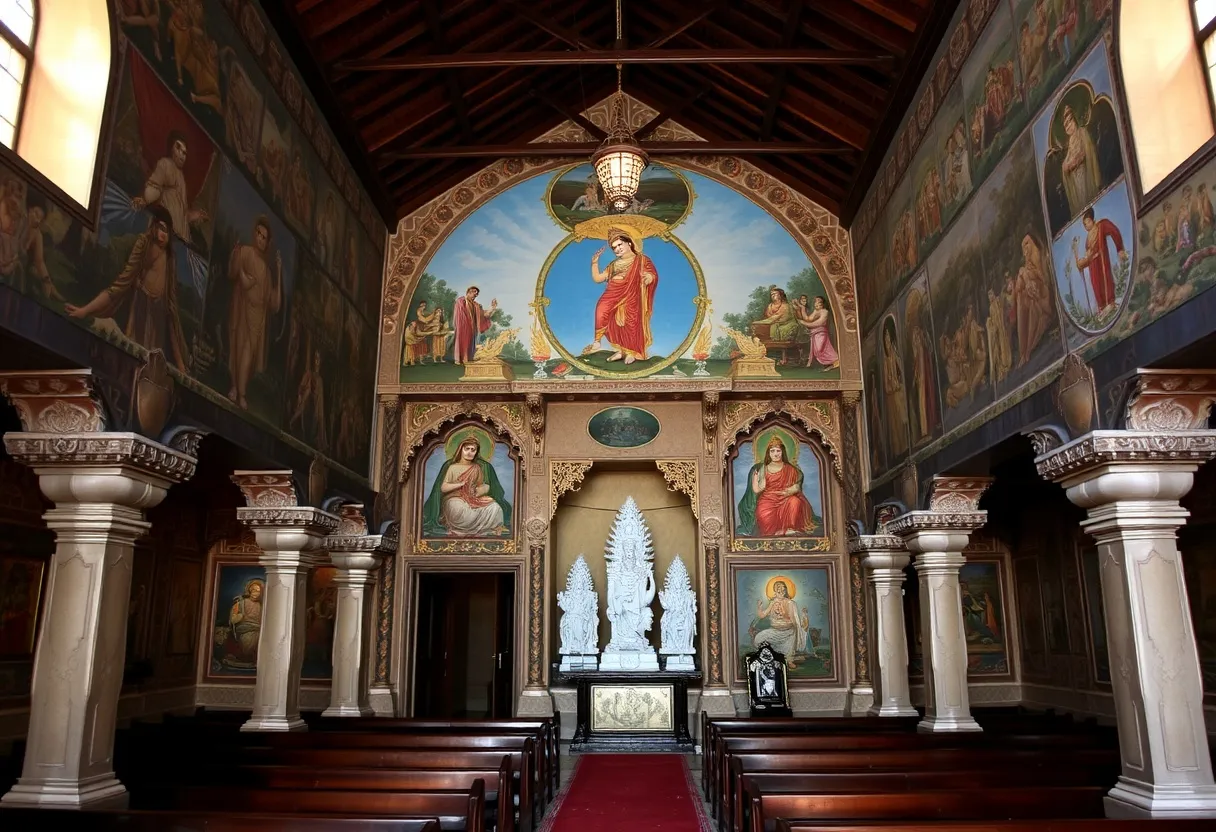
In Alleppey, faith is not hidden in corners — it spills across walls in frescoes, rises into vaulted ceilings, and echoes through wooden rafters. As I walked barefoot into the cool interior of St. Mary’s Forane Church in Champakulam, the scent of incense and the aroma of ancient wood welcomed me. I realized I was stepping back in time.
One of the oldest churches in India, St. Mary’s was built in 427 AD and later rebuilt in the 16th century by the Portuguese. Its whitewashed façade, modest from afar, opens into a palette of sacred art. I looked up to find a starburst of murals on the ceiling — a painter’s imagination bringing to life angels, saints, and biblical scenes, vividly depicted using natural vegetable dyes. Each panel was a visualization of a different narrative: the Annunciation, the Last Supper, the Crucifixion — the style, an ingenious blend of European technique with Kerala’s native artistic traditions. I was surprised to find Jesus as the locals perceived Him, not with porcelain skin, but sun-kissed and earthy, just as he might have appeared to the early Syrian Christian settlers.
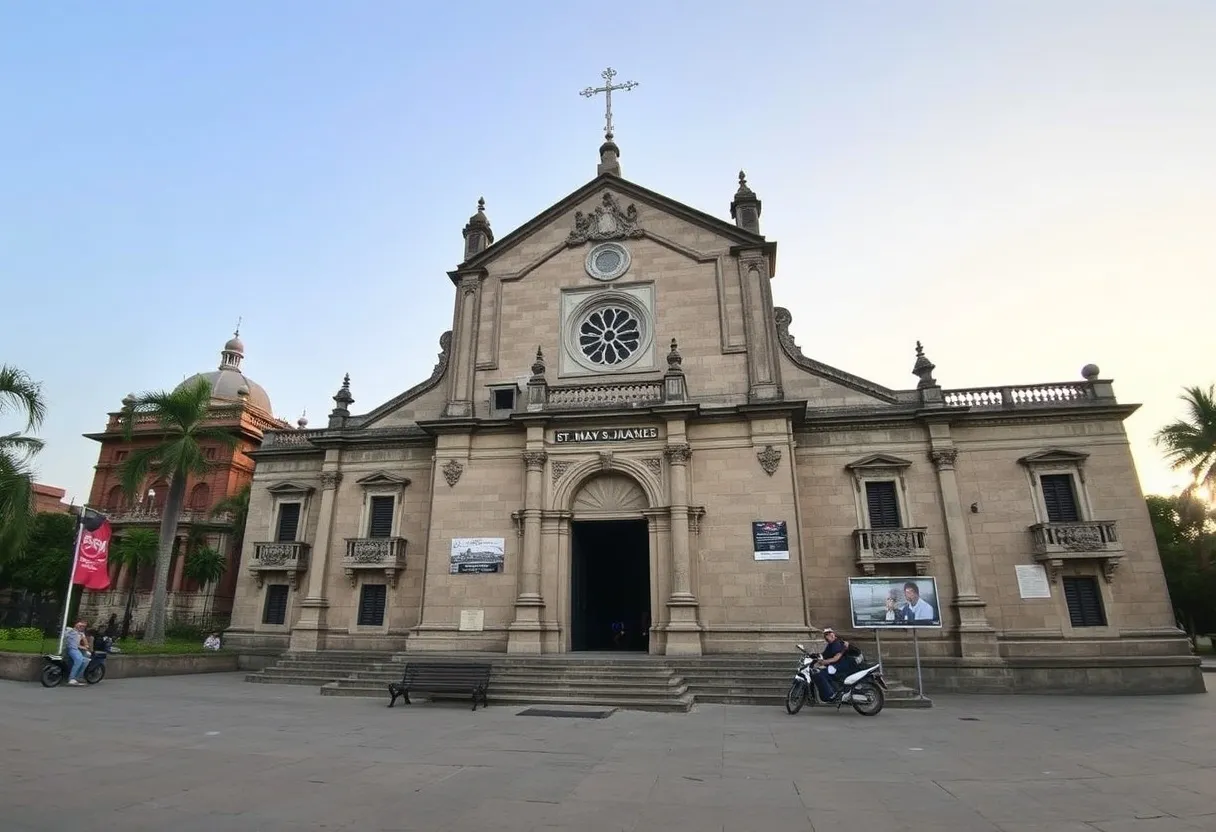
Alleppey’s churches are not uniform in look and facade. They are mosaics of identities — Portuguese, Syrian, Dutch, and Indian styles, brought together by centuries of spiritual amalgamation. Some have onion domes, others feature Dutch gables. Many sit beside canals, as if the waters themselves were drawn to prayer.
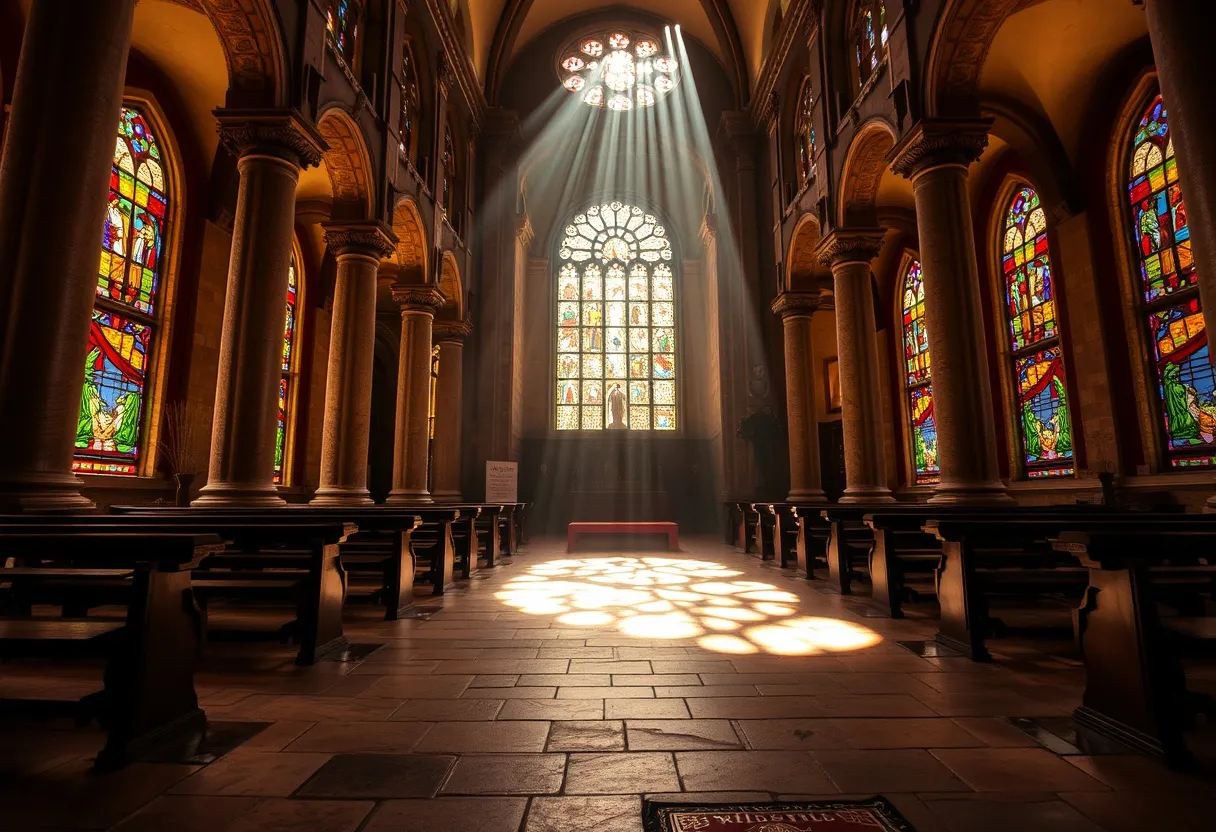
At Arthunkal Basilica, devoted to St. Sebastian, sunlight streamed through stained glass, casting jewel-toned halos on the stone floor. Legend says the Portuguese brought a statue of St. Sebastian here from Milan in the 16th century. Locals speak of miracles — how the saint protected villagers from epidemics, how prayers whispered before his wooden image brought healings too quiet to make headlines. Faith here is tactile. It clings to pews rubbed smooth by generations, to prayer beads looped over fingers, to the flickering flame of a thousand candles.
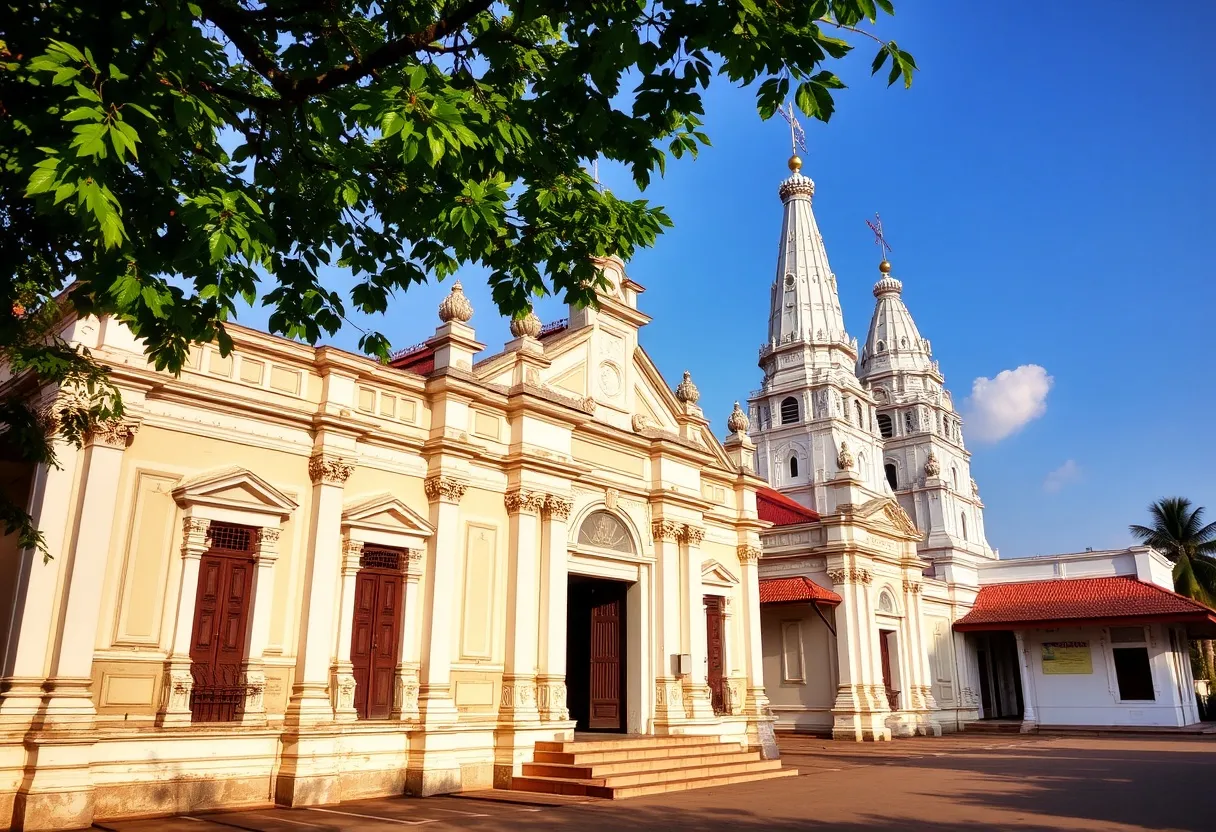
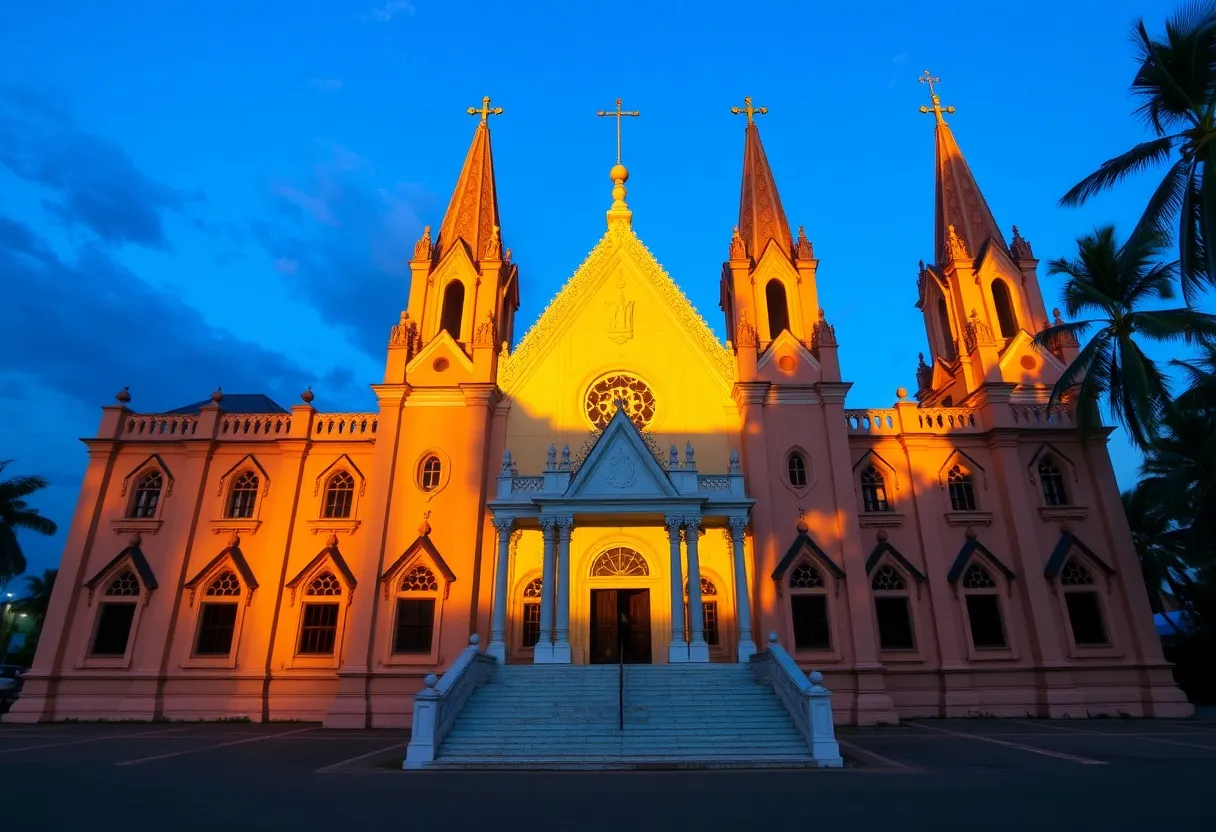
There stood St. Andrew’s Basilica, Arthunkal, in the golden hour — the glowing facade speaking volumes about its mingling of Gothic and Indo-European styles, with soaring spires and carved altars brought to life by shadow and sun. Outside, pilgrims bathed in the surf, honoring an old ritual that ties sea and spirit, salt and salvation.
Each church pulsates to its unique rhythms. The Holy Family Church in Punnapra, with its Baroque altar and stained glass from Belgium, hums with quiet devotion. Our Lady of Mount Carmel Roman Catholic Cathedral, Alleppey tells a quieter story, with the statue of Mother Mary holding Jesus, an interior decorated beautifully with ceramic tiles, and a cemetery on the cathedral grounds where members of the Catholic community are laid to rest. A woman lit a single candle, pressed her forehead to the altar, and left. No choir. No grandeur. Just silence, thick and holy.
Faith in Alleppey is not just about buildings. It’s about stories passed down through generations translated into canvases of devotion, carved and painted, sung and whispered, waiting for pilgrims like me to step inside and listen.

7 Reasons Why the Should Be on Your Kerala Itinerary Alleppey, often referred to as

Alleppey To A Comprehensive Guide If you’re in Alleppey and have completed exploring the town

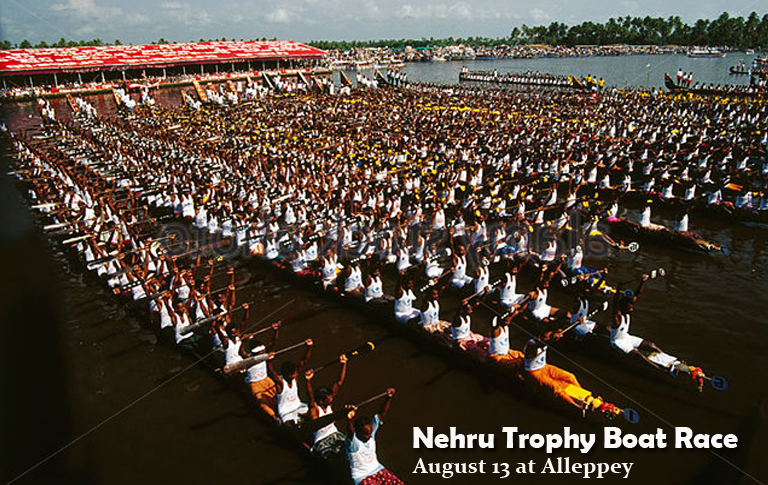
Kerala Backwater Festivals — Every year, the serene backwaters of Kerala erupt into a thunderous
Beachfront Bliss in Kerala
Discover Akoya Beach Villa, Alleppey